




What Is Weave Density? How to Judge Fabric by Touch and Sight
November 24, 2026 · La Vita Home Collection
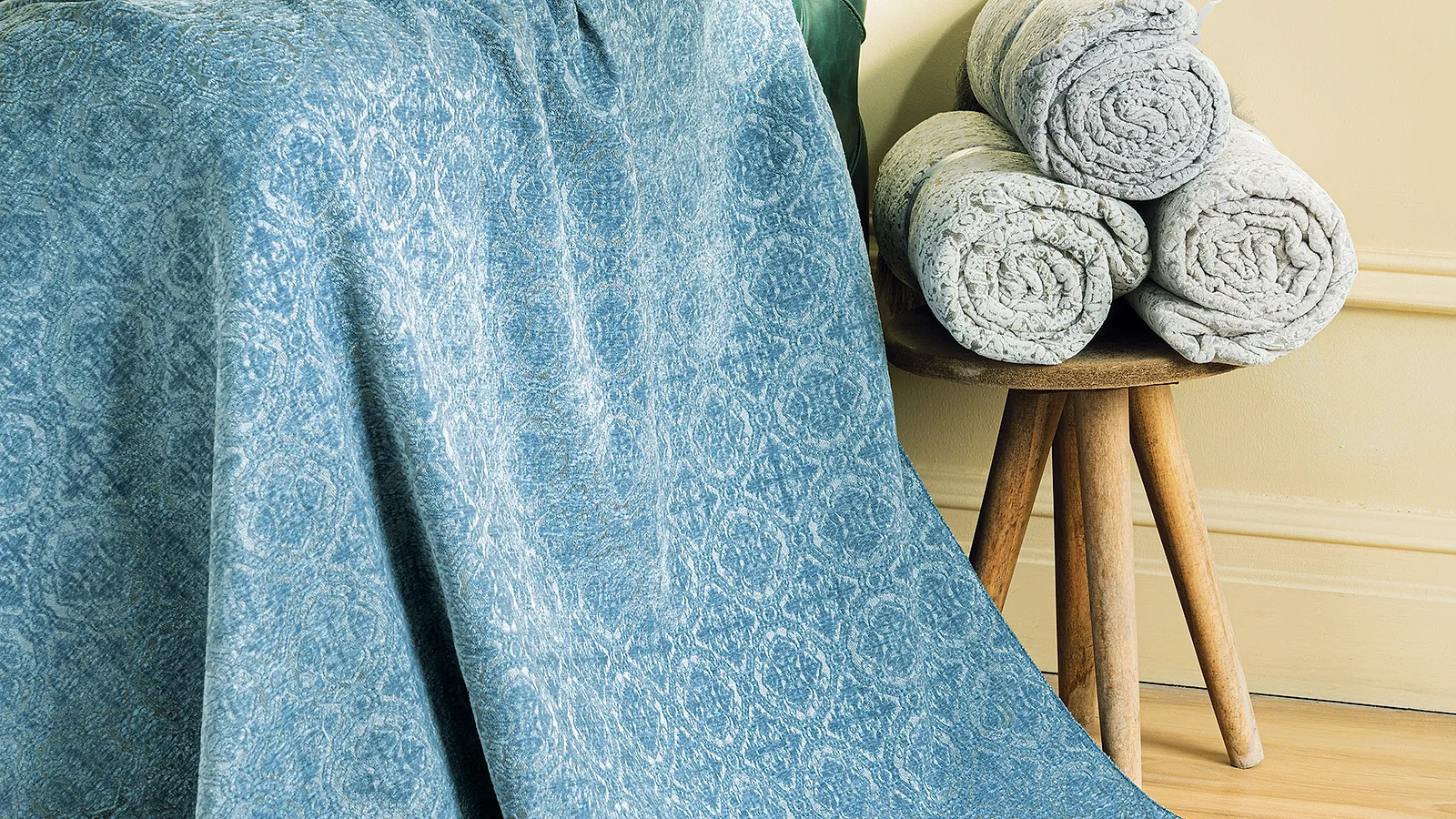
For many shoppers, fabric quality is a vague idea. Labels offer numbers and sellers offer words. Fortunately, a few simple tests let you recognize good fabric yourself.
Weave Density in Simple Terms
Fabric is made by interlacing lengthwise and crosswise yarns. The more yarns there are in a fixed area, the higher the density. Dense fabric is usually more durable and evenly soft. But density alone doesn't guarantee quality: good yarn at medium density beats poor yarn at high density.
The Light Test
Hold the fabric up to the light. An even weave with no bright or dark patches is a sign of regular yarn. If light passes through some spots much more than others, the weave is uneven.
The Fist Test
Squeeze the fabric in your fist for a few seconds and let go. Natural cotton wrinkles but gradually recovers. Sharp, lasting creases in a fabric that's meant to be soft may point to poor finishing.
The Edge Test
Look closely at the edges and seams. Pulled threads, uneven stitches and narrow seams are the things that cause trouble after a few washes.
Deceptive Softness
Some fabrics are finished with softeners and feel very smooth at the moment of purchase, but lose that softness after washing. Look for fabric whose softness comes from the yarn itself; its touch is usually calm and natural, not slick or greasy.
Every Fabric Has Its Own Measure
- Cotton: an even weave and natural softness
- Velvet: pile density; run a finger against the pile and see that the ground fabric doesn't show
- Chenille: raised design and firm yarns; tufted yarn shouldn't come away with a gentle pull
Smell and Color
New fabric has a faint factory scent, but a sharp chemical smell isn't a good sign. To test the color, rub a hidden corner with a slightly damp white cloth. If a lot of color comes off, take special care in the first wash.
Frequently Asked Questions
Is heavier fabric always better?
No. The right weight depends on use; lightness and softness matter for a sheet, and volume and warmth for a winter comforter.
What should I be sure to touch in the store?
The pillowcase and any part in contact with skin, because it will be against your face for hours.
Recommended Designs
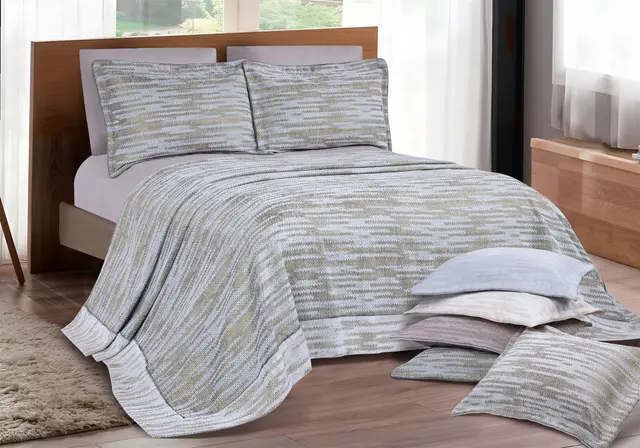
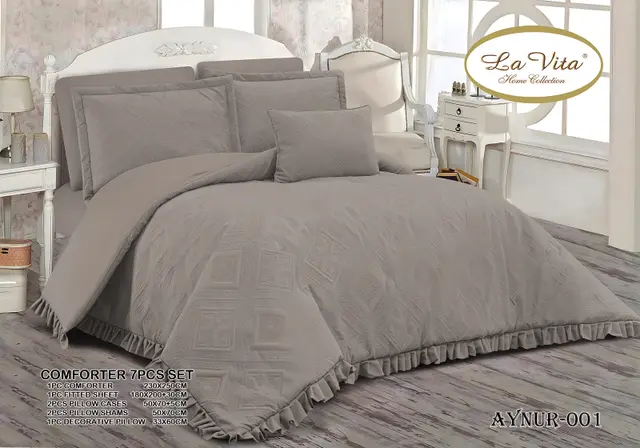
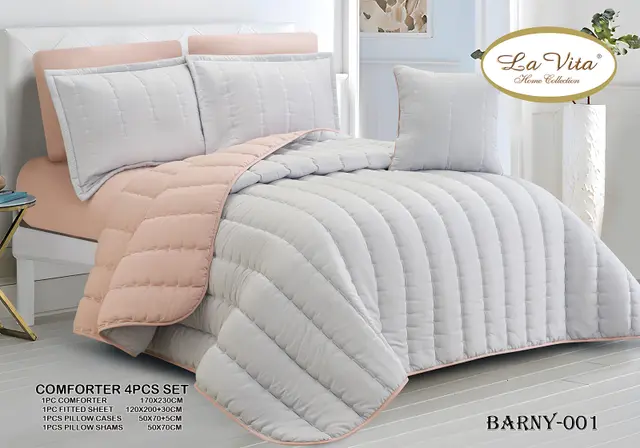
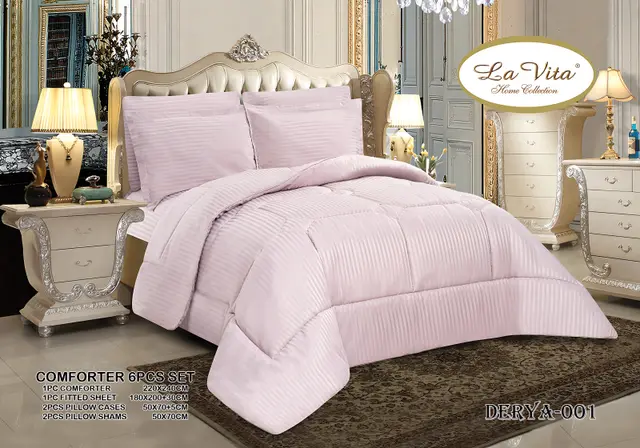
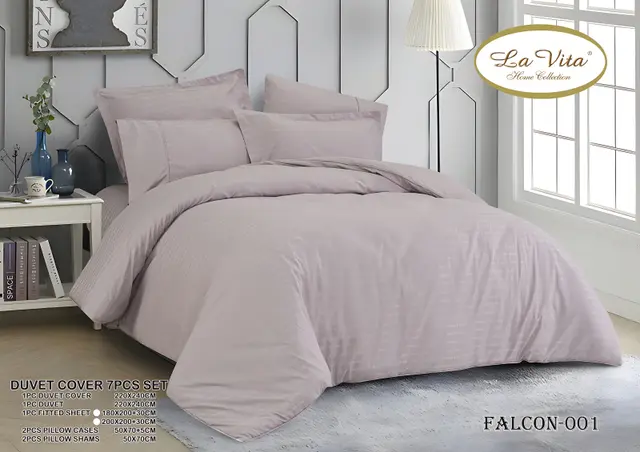
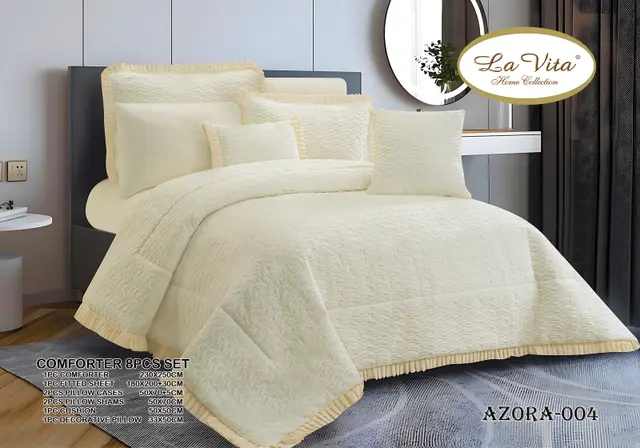
More Articles
Ten Common Bedroom Styling Mistakes That Steal a Room's Beauty
Short curtains, small rugs, cold light and misplaced cushions: mistakes that spoil many rooms, and a simple fix for each.
Headboards and Wood Tones: Choosing Bedding for Every Type of Bed
Walnut, beech, classic white or upholstered: which comforter colors look best with each bed, and what role the headboard plays in a room's character.
The Minimalist Bedroom: Less, but With More Care
Minimalism doesn't mean an empty room; it means everything in it is considered. A guide to color, texture and bedding for a calm, uncluttered bedroom.